

The Valuation Shock
On Tuesday, October 28, 2025, Jensen Huang walked onstage in Washington in his customary leather jacket. A preacher in leather, in front of his congregation. He did not unveil a chip. He narrated a future: half a trillion dollars in booked orders through 2026, seven supercomputers commissioned for the U.S. government, a billion dollars into Nokia to build the networks that don’t exist yet. Less a product launch than a sermon on where history is going. He called it unprecedented visibility into future revenue.
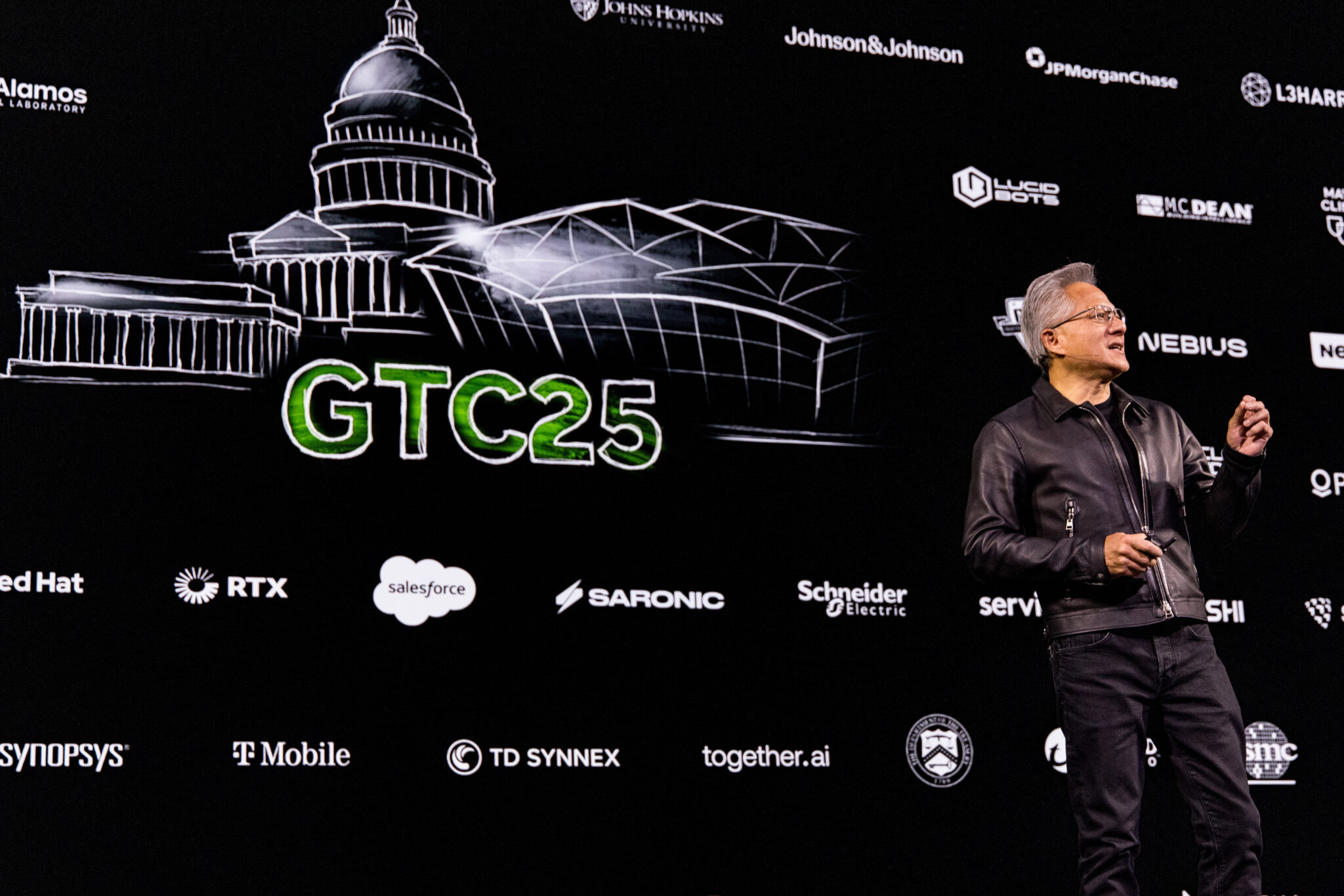
The market took the collection plate the next morning. By Wednesday’s open, NVIDIA had crossed $5 trillion, the most valuable company in human history. It was worth more than every stock market on earth but three: the United States, China, and Japan.
Reach for “bubble” and you’ll feel clever for about a day. Resist it. The better question is what a number like this actually capitalizes — and what it means for everyone who isn’t NVIDIA. Which is to say: you.
This Is Not Tulips
Let’s start by killing the lazy version of the skeptical case. NVIDIA is not Pets.com. Jensen built a business of almost vulgar strength: a monopoly-adjacent machine with software margins and industrial demand.
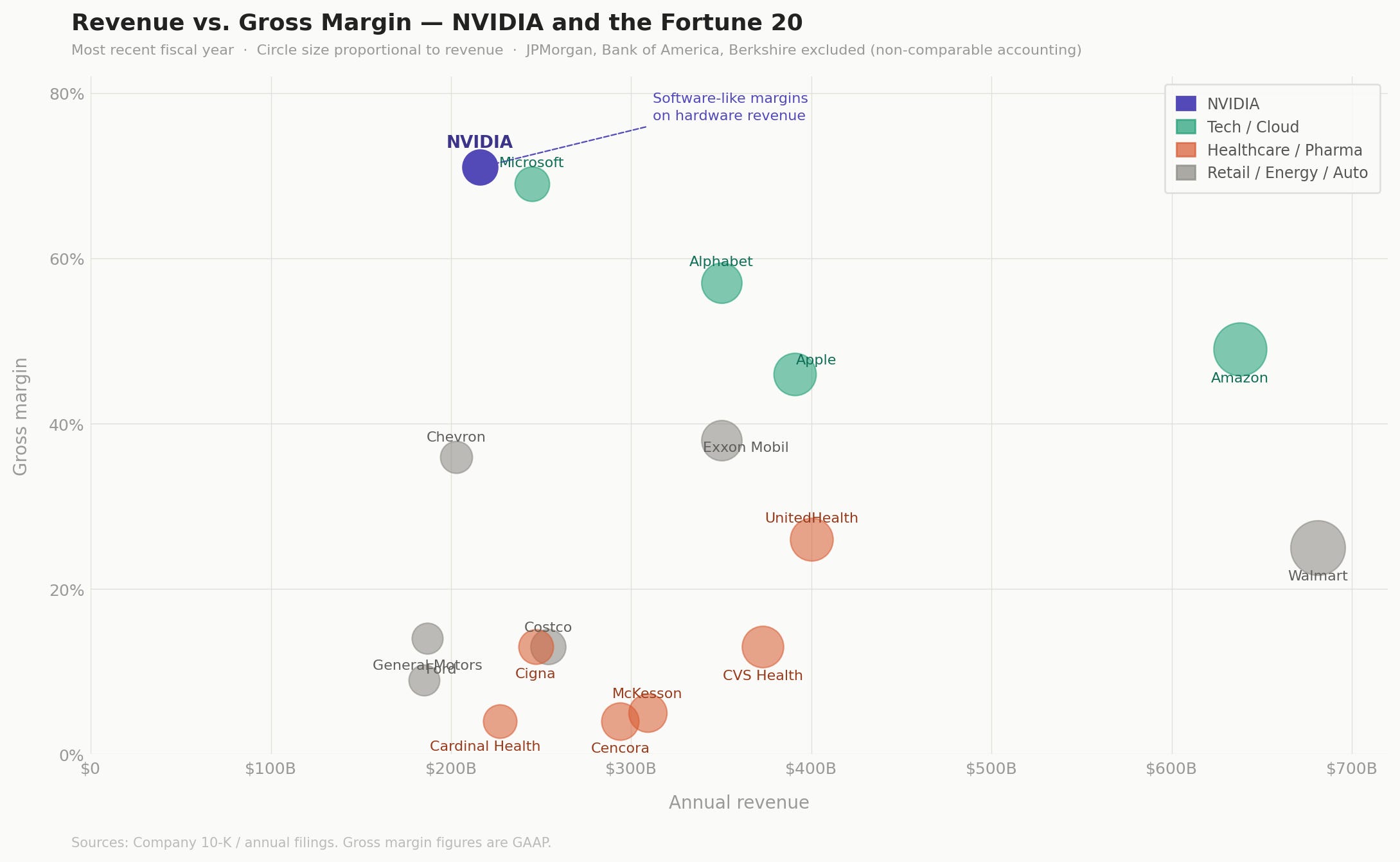
In fiscal 2026 it generated $215.9 billion in revenue, up 65% year over year, with $120.1 billion of GAAP net income. Gross margin reached 71.1% for the year and touched 75% in the fourth quarter. That’s the software-like margins on physical infrastructure, at a scale no hardware company has approached. Data center revenue was $193.7 billion, roughly 90% of the total. Huang has projected a path to half a trillion in annual revenue — a different half-trillion than the order book, and a steeper claim. And, given the trajectory, that is not obviously wrong. The CUDA ecosystem has built switching costs that are partly technical and partly cultural: nearly every AI researcher alive learned to code in NVIDIA’s software environment, so leaving it means re-educating a profession, not re-engineering infrastructure.
So the dumb skepticism fails.
A bubble is a price with nothing under it. NVIDIA is the other thing: a price held well above what the arithmetic alone would carry, by a force that’s real but separate from the arithmetic. Pets.com was the first kind, all narrative and no floor. NVIDIA is the second.
The Fundamentals Don’t Suffice
Here is the problem that pointing at the fundamentals and calling it a day doesn’t solve. A great business and a great valuation are different claims.
The question is not whether NVIDIA is great. The question is whether a $5.5 trillion valuation prices greatness, or prices the indefinite persistence of greatness at unprecedented scale under conditions that have never been sustained. (Spoiler: It’s the latter.)
A test. At 25 times earnings — generous by historical standards, meaning investors are paying $25 today for every dollar NVIDIA earns per year — NVIDIA needs roughly $221 billion in annual net income to justify its valuation. At today’s net margin that implies roughly $400 billion in revenue. It earns $120 billion now. The bull case says it grows into the number. The skeptical case says the margin at which it gets there may not look like today’s margin.
NVIDIA keeps roughly three dollars of every four it charges. Its 71-75% margins reflect real demand and real lock-in — but also constrained supply and hyperscaler urgency, which is not ordinary demand. Google, Amazon, Microsoft, and Meta aren’t buying because they’ve modeled a return. They’re buying because they can’t afford to be the one caught without chips when AI turns from experiment to infrastructure. That’s an arms race, and arms races are terrible conditions for pricing discipline. The real ceiling was never GPU supply. It’s whether these buyers ever earn a return that justifies the next order — customer economics, not capacity.
The market is treating an extraordinary moment as a permanent one. The financials are real; the faith that they’ll stay this good forever is not. And that faith is what you’re actually buying at this price.
Capital Market Multiples Are Produced in Cultural Markets
Faith like that doesn’t come from nowhere. The theorists who’ve taken the question most seriously got close and stopped short.
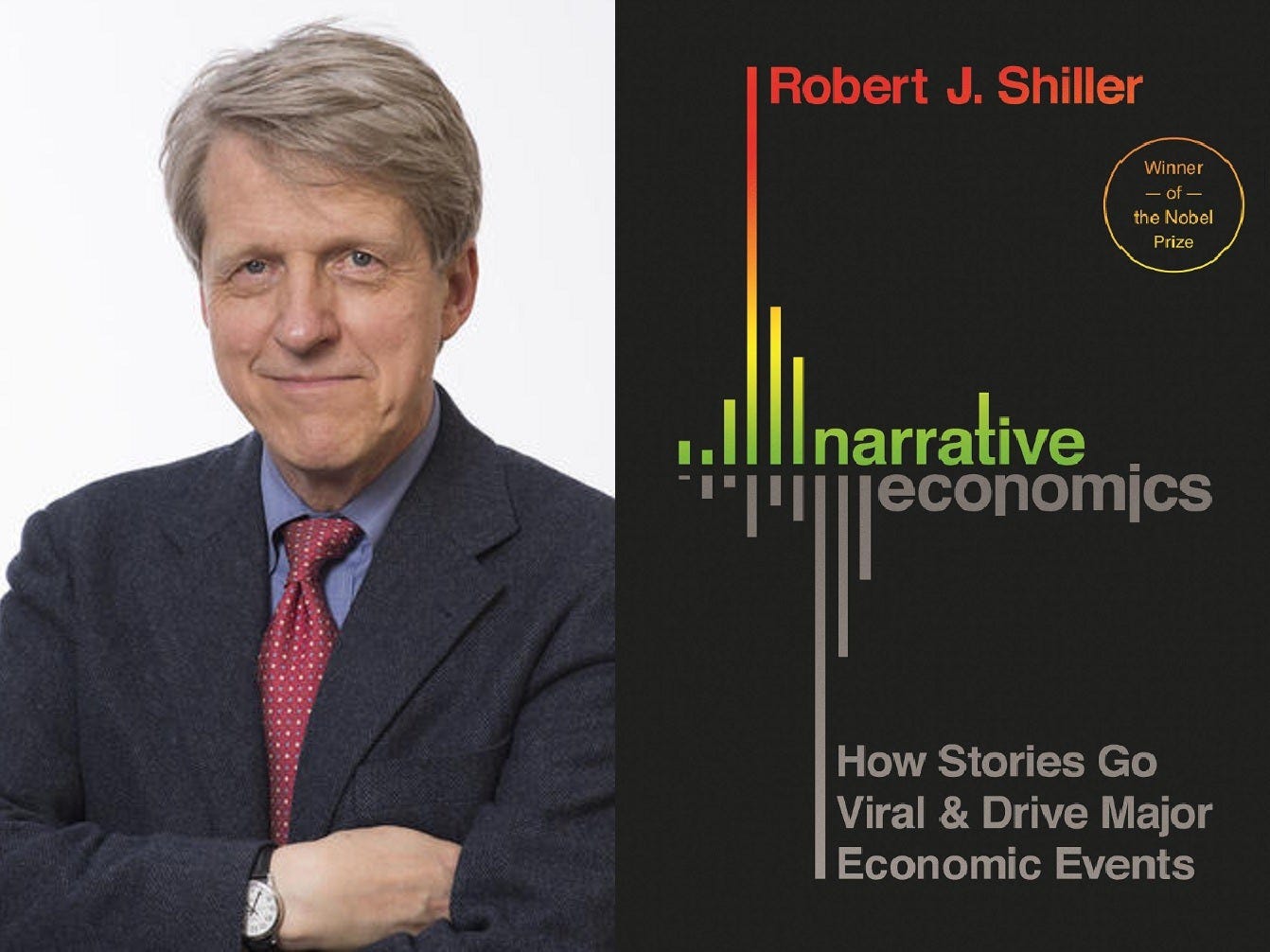
Shiller traced narrative transmission: economic stories spread through populations the way epidemics do. Think infection rates, latency periods, and the characteristic acceleration of a belief that has become too widespread to need a reason. Soros named the feedback loop that follows: rising prices generate confidence, confidence drives buying, buying drives prices.
Both are right about what happens once belief enters capital markets. Neither explains where the authority of the belief was produced in the first place.
I’ve written before about the cultural market as the arena where companies compete not for customers or capital but for relevance, status, identity, and historical significance — where the market decides which positions matter and which futures are inevitable. It’s a market that prices position. What I haven’t traced until now is how that position accumulates before the multiple recognizes it.
The answer begins before the model, in cultural gravity: the pull a company exerts once it has accumulated enough cultural capital that capital of every kind — financial, reputational, human, relational, and political — flows toward it on terms its measured fundamentals do not, on their own, explain. This builds on Ana Andjelic’s excellent work in Sociology of Business, which is the sharpest running commentary on what actually makes a company culturally magnetic.
Cultural Gravity
The pull a company exerts once it has accumulated enough cultural capital that capital of every kind — financial, reputation, talent, relational, and political — flows toward it on terms its measured fundamentals do not, on their own, explain.
The obvious objection is that this can only be seen in the rear-view: you call something culturally heavy after its multiple has already run. But gravity forms before it reaches the price, and it leaves marks you can read in the present.
Category authorship. Does the company name the future, or compete inside a name someone else wrote? Rule-maker versus rule-taker — and which one a company is shows in the present, not only in hindsight. NVIDIA did not invent AI infrastructure, but it has done more than anyone to define what the category means to investors. The firms merely supplying that future — however physically indispensable — are priced inside categories they did not get to define.
Narrative expansion. Is the set of futures the market credibly assigns the company widening or narrowing? Tesla was priced as a carmaker, then a battery company, then energy, then autonomy, then robotics — each new future enlarging the space investors were willing to underwrite. You can watch the aperture open in analyst notes and headlines well before it reaches the multiple.
Belief beyond the priesthood. Has the story escaped finance and entered the general culture? When people who will never open a 10-K hold a view on the company, gravity is present. When conviction lives only inside trading desks, it isn’t — no matter how many dollars are riding on it. Reach is observable now, in plain sight.
Capital arriving early. Are engineers, buyers, and developers routing toward the company ahead of any return that would justify it? Talent chooses the place that feels historically inevitable; procurement defaults to the anointed option; developers build for the platform they assume will win. That migration shows up before the financials do.
None of these markers is the price. That is the point. They run ahead of it. By the time cultural gravity registers in the multiple, it has been accumulating in plain view for years.
With cultural gravity, a company stops operating within its category’s rules and starts writing them. Past that line, the market crowns it the designated instrument of a future it already believes is coming — Tesla of the electrification era, Facebook of the social era, SpaceX perhaps of space itself — and the company becomes a Schelling point for talent, customers, developers, and capital.

NVIDIA built a brutally strong commercial, technical, and ecosystem position. But it didn’t earn $5 trillion by making the best chip. It earned it by becoming the market’s designated instrument of the AI future. The chip made the story credible. Cultural gravity made the valuation elastic.
The next question is how that gravity becomes a price.
How Culture Enters the Model
“Culture affects valuation” is a vague claim, and vagueness is what lets a capital-markets analyst dismiss it. Belief does not sit outside the model, coloring it from a distance. It enters through the inputs — which is why it is so hard to see. A discounted cash flow looks like arithmetic. But every input is a belief wearing the costume of a number.
Start with the addressable market. Markets do not only price what a company does. They price what it might become. The cultural story sets how large that imaginative space is allowed to be. Watch what the cultural market has done to NVIDIA’s category: chip, then infrastructure, then platform, then the operating system for the next computational era. A semiconductor company inherits cyclicality, margin pressure, and substitution. An AI platform inherits software dynamics — lock-in, developer dependence, long-duration control. The same revenue means something different depending on which category the market believes in. A company with weak cultural meaning is priced inside its category. A company with strong cultural meaning is priced against a future it does not yet occupy. The multiple is a permission structure, and culture writes the permission.
Growth duration is the second input. The harder it is to assign probabilities to a future, the more investors lean on a story for causal logic. A category label — the Intelligence Age, the energy transition — supplies that logic and extends how many years of growth the model is willing to project. Culture doesn’t just set the size of the prize. It sets how long the market believes the runway runs.
Margin durability is the third. NVIDIA’s margins look impossible to sustain; whether they are structural or cyclical is the question that moves the valuation. The answer an investor reaches tracks how completely they believe the Intelligence Age has arrived. The confidence that the margins will hold is not a technical judgment. It is a cultural judgment dressed as a forecast.
Risk is the fourth and least visible channel. A company that feels inevitable is forgiven its uncertainties — concentration, geopolitics, governance, delayed profit — because the story files them as temporary obstacles on a fixed historical path. Culture works both halves of the equation at once: lifting the cash flows in the numerator, lowering the uncertainty in the denominator.
Then comes the feedback loop: cost of capital. A believed-in company raises money cheaply — higher valuation, less dilution, better debt terms, more patient shareholders, a stronger acquisition currency. That capital, deployed well, buys advantage. And the same migration that tipped you off early — talent, customers, and developers arriving ahead of the numbers — hardens into a real moat once they commit.
This is where cultural gravity becomes economically productive. It compounds into financial leverage — not because belief creates value from nothing, but because belief funds the construction of what the market has already declared inevitable. The designation precedes the full realization of the advantage. Then it helps finance that advantage into existence.
Three Tests
A framework that can explain any expensive stock after the fact explains nothing. So put it to three tests — pricing, consequence, and counterfactual — and see whether it survives.
#1 The Pricing Test

The pricing test holds the fundamentals roughly constant and varies only the cultural designation. TSMC manufactures the chips NVIDIA designs. Strip the question to physical indispensability and TSMC has the stronger claim — nothing ships without its fabs, and no rival can replicate them this decade. Yet it trades at a fraction of NVIDIA’s sales multiple. Same supply chain, same AI demand, comparable irreplaceability, a radically different price. The variable that moved is not the arithmetic. The market designated NVIDIA the instrument of the AI future and filed TSMC under “manufacturer,” and the multiple followed the designation. If cultural gravity were just a label we paste onto whatever already trades high, TSMC would trade like NVIDIA. It doesn’t.
#2 The Consequence Test
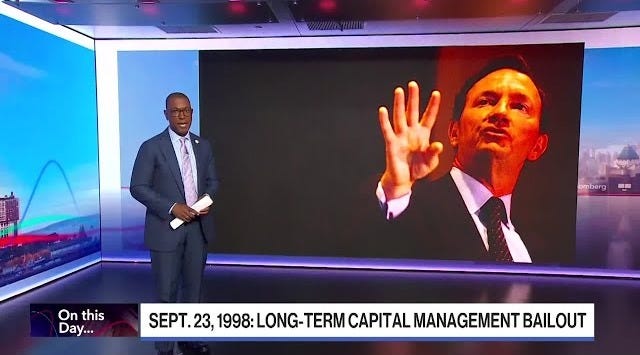
The consequence test runs the other way: financial leverage without cultural gravity. Long-Term Capital Management had turned $4.8 billion of equity into $125 billion of exposure and over $1 trillion in notional derivatives by 1998, and when Russia defaulted it lost almost all of it in weeks, requiring a Fed-orchestrated rescue. The financial stakes were systemic. Yet outside finance, LTCM never became a generational memory. It had a story — mathematical mastery over markets — but that story lived inside the priesthood of finance. No ordinary person had organized their sense of the future around convergence arbitrage in off-the-run Treasury spreads, so when the models failed, the public was not disoriented. You cannot be disoriented by the collapse of a belief you never held.
#3 The Counterfactual Test

The counterfactual test runs on a company that fits neither prior case: strong fundamentals, real moat, but no cultural designation. ASML is the only manufacturer of extreme ultraviolet lithography machines on earth. There is no second source. Without its tools, neither TSMC nor NVIDIA’s foundry partners can produce leading-edge chips — which means, in a literal sense, ASML sits upstream of the entire AI supercycle. Its backlog is measured in years. Its gross margins run above 50%. It is, by any technical measure, more irreplaceable than most of what the market calls indispensable.
It trades at roughly 30 times earnings.
That’s a fine multiple for a fine business. It is not the multiple of a company the market has designated the instrument of a historical moment. ASML doesn’t name the future. It supplies it. A company can be genuinely monopolistic, structurally protected, and correctly priced — all at once. What it can’t do, at a fine multiple, is claim cultural gravity it hasn’t built. The market isn’t mispricing ASML. It’s pricing exactly what ASML has offered it: a business, not a belief.
That’s the full bracket. Cultural gravity moves the multiple when fundamentals don’t change (TSMC). Its absence mutes the public reckoning even when financial stakes are enormous (LTCM). And a company can hold every structural advantage the analyst notes could want, be priced fairly, and still be worth a fraction of a culturally designated peer — because the multiple was never just pricing the moat. It was pricing the story the market agreed to tell about where history was going.
The Same Pattern Pre-IPO
If the reporting is directionally right, SpaceX is preparing a public-market debut at a valuation between $1.75 trillion and $2 trillion. With reported 2025 revenue of $18.7 billion and losses on the year, the low end of that range would imply roughly 90 times revenue. At that price, investors are not buying a transportation company, a satellite company, or a defense contractor. They are buying the designated instrument of the next physical frontier.
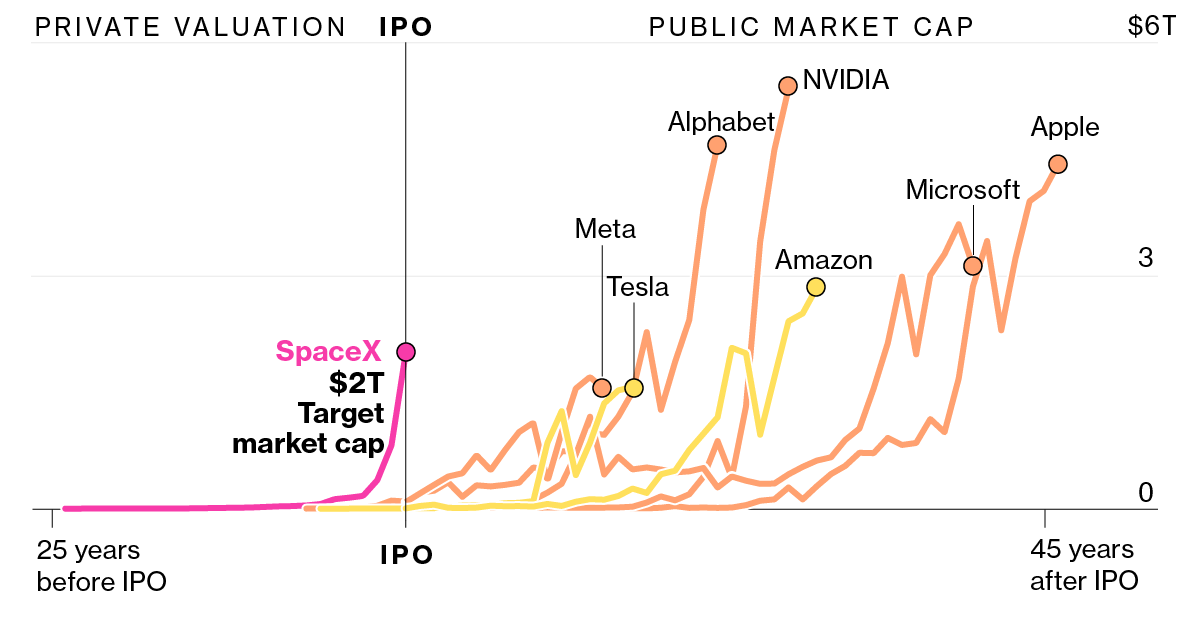
Set the multiples against each other. NVIDIA, at roughly $5 trillion on $216 billion in revenue, trades near 23 times sales — and that already strikes most observers as steep. SpaceX, at the reported range, would trade near 90. The company moving from private hands into public ones is not priced more conservatively as public-market discipline arrives. It is priced roughly four times more aggressively. Which is what the theory predicts: the less arithmetic there is to anchor the price, the more of the valuation is belief — and a company that has never reported to public shareholders offers almost no public arithmetic to anchor on.
But that 90 isn’t paying for rockets. Like Tesla before it, SpaceX has kept widening the aperture — launch, then Starlink, then Starship, then the more speculative futures stacked on top: orbital manufacturing, a Martian economy, a sovereign space-infrastructure layer that nations rent rather than build, and renting $1B/month compute capacity to Google. Each new future the market agrees to assign enlarges what the multiple is allowed to cover. The launch business is a small fraction of that 90. The rest is a stack of futures investors have agreed to underwrite in advance — and a private company offers no quarterly arithmetic to discipline which of them are real.

This is what an IPO at that multiple measures. A public offering is supposed to be where belief meets discipline — liquidity, index inclusion, daily price discovery, sell-side coverage grinding competing estimates toward fundamentals. But the discipline arrives after the price is set, not before. SpaceX investors who buy in at 90 times revenue are making a near-pure bet on a culturally assigned future: that this is the company that owns space, the way NVIDIA owns AI infrastructure. The losses, the concentration, the dependence on a single founder — the story files them under “temporary,” because the story has already decided where history is going.
When OpenAI, Anthropic, and the others come public at trillion-dollar valuations, each will be priced the same way: on a future the market has already labeled inevitable, by investors paying today for the right to have believed it early.
The Tell
NVIDIA is the opposite case. SpaceX hides its arithmetic; NVIDIA discloses all of it. And the price looks past it just the same. The tell isn’t the size or the slope of the chart. It’s what investors are willing to leave unpriced.
The risks that should weigh on a company this size are not hidden: customer concentration among a handful of hyperscalers, those same customers designing their own silicon, the cyclicality of data-center capex, margin normalization as supply catches up, export controls and China exposure. Each appears in the analyst notes but none of them has been allowed to govern the valuation.
Beneath all of them sits the deeper risk, the one that isn’t specific to NVIDIA at all: AI infrastructure spending may be outrunning AI revenue. The spend isn’t in dispute — the five largest hyperscalers are on track to commit somewhere around $600 billion to AI infrastructure in a single year. The return is. By one industry estimate, that trajectory needs to throw off on the order of $2 trillion in annual revenue to justify the capital going into the ground, against a shortfall already measured in the hundreds of billions and widening. Every other risk in the analyst notes is a risk to NVIDIA. This one is a risk to the premise. The price has seen all of it and waved it through.
When Gravity Fails
Wave it through long enough and you arrive here. This is the part that should concern an owner of the stock, because it doesn’t require the business to fail.
Cultural gravity holds a price above what the fundamentals alone would carry. Remove the belief and the gravity gives out. The price falls back toward the arithmetic — and the arithmetic, for NVIDIA, sits far below where the stock trades. None of this runs through the income statement. If investor perception slides from “the indispensable owner of the AI future” to “the leading merchant-silicon supplier in a competitive capex cycle,” the multiple compresses even while revenue keeps compounding. NVIDIA wouldn’t have to miss a quarter. The story would only have to stop expanding.
And history proves the point. Every dominant infrastructure provider in a capex supercycle has returned roughly nothing to shareholders in the decade after peak — railways, the 1920s utilities, IBM, the fibre boom — even when the technology was real and the company survived. Cisco was right about the future and wrong as a stock. At its 2000 peak it traded near two hundred times earnings, briefly became the most valuable company in the world, and helped build the internet it had promised. The customers got the future almost immediately. The shareholders waited a quarter-century to get back to even.
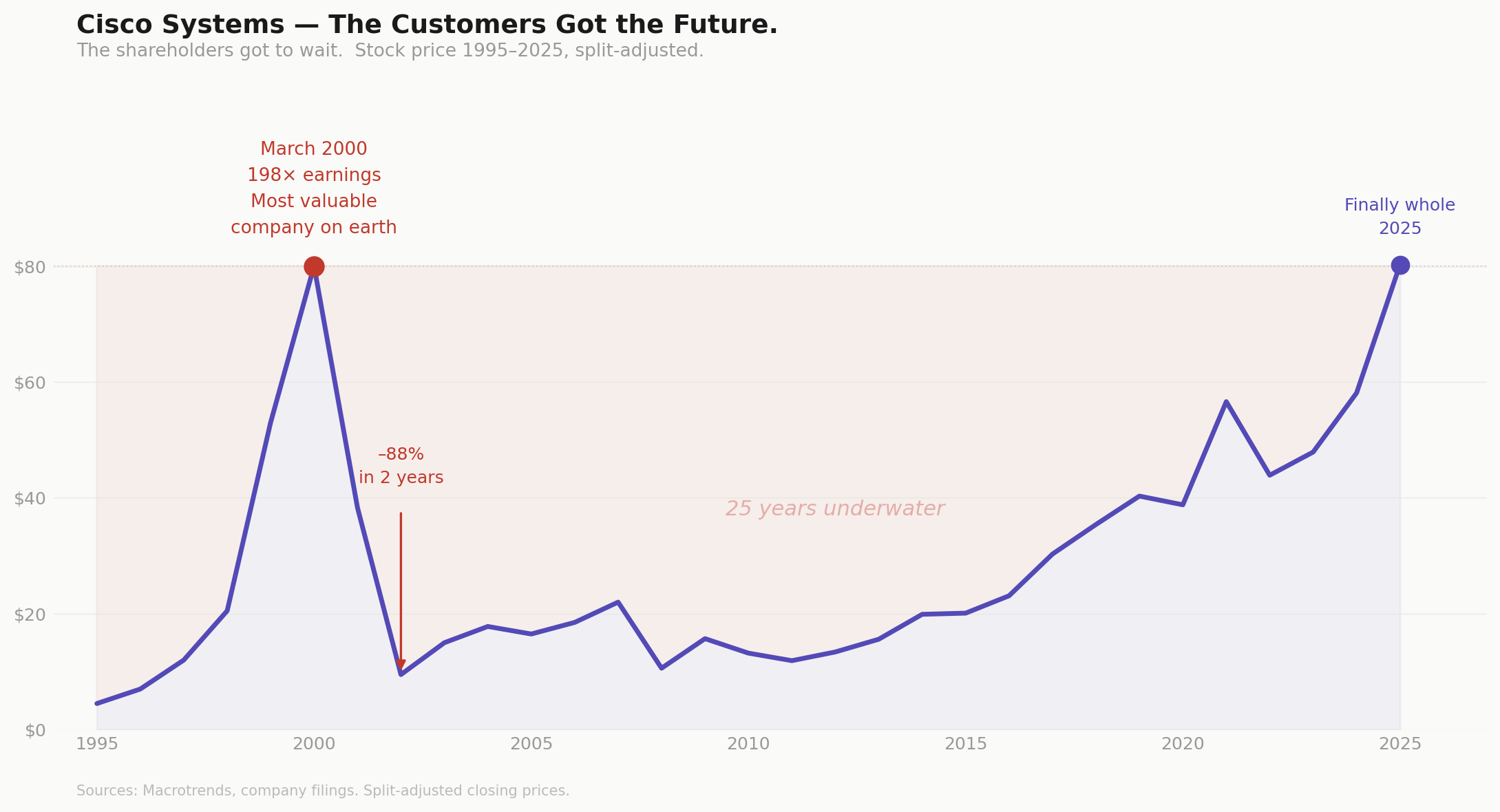
Notice what does the killing in those stories, though, because it isn’t belief. Capex cycles overshoot — competitive bidding builds capacity past the point where the last unit earns its cost of capital, supply catches up, the rents collapse. NVIDIA has its own versions waiting: customers designing their own silicon, chips a generation obsolete in three years. That cliff is structural. It would be there if no one felt a thing. Cultural gravity is not the trigger, and I won’t pretend it is.
What gravity explains is the part the base rate leaves open: the height, and the depth. Supply economics tell you the price reverts. They do not tell you why it climbed to two hundred times earnings before it did. Nothing in a spreadsheet justifies that number — belief does. The conviction that a company is the one instrument of an inevitable future is what lets a multiple leave the atmosphere. The cycle decides there’s a cliff. Gravity decides how high you were standing when you reached it.
And look one floor up, at the capex itself. Why are a handful of customers about to spend the better part of a trillion dollars in a single year? Not because they’ve each modeled the return. Because none of them can afford to be the one caught without the chips when AI turns from experiment to infrastructure — the arms race from a few sections back. That spending is belief wearing a capex costume. The supercycle is cultural gravity in the commercial market, the same way the multiple is cultural gravity in the capital market. So when a hyperscaler finally says “rationalization” on an earnings call — the trigger every base-rate story turns on — that isn’t the fundamentals quietly turning cold. It’s the belief withdrawing one floor up, and the capex, then the multiple, following it down. The two don’t fall in sequence. They were always the same thing.

That’s the danger a great company carries when it’s priced as the sole instrument of history. What corrects is the story, not the earnings — and the more gravity the market put behind the story, the farther the fall when it stops believing.
What This Changes
Here’s what no analyst will write in the memo: the model didn’t find the price. It inherited it. A discounted cash flow can’t manufacture conviction — it can only launder someone else’s into a number with two decimal places. The growth rate looks credible because somebody already bought the story. The margin looks durable because somebody already decided the boom is permanent. The multiple looks reasonable because somebody already settled what kind of company this is. Everyone downstream just inherits the verdict and reverse-engineers the math to fit.
That’s the whole mechanism. Cultural gravity produces the conviction; the conviction is what holds the numbers up. Take it away and the same figures read like wishful guesses on a napkin. The model didn’t author the belief. It put it in a suit and called it arithmetic.
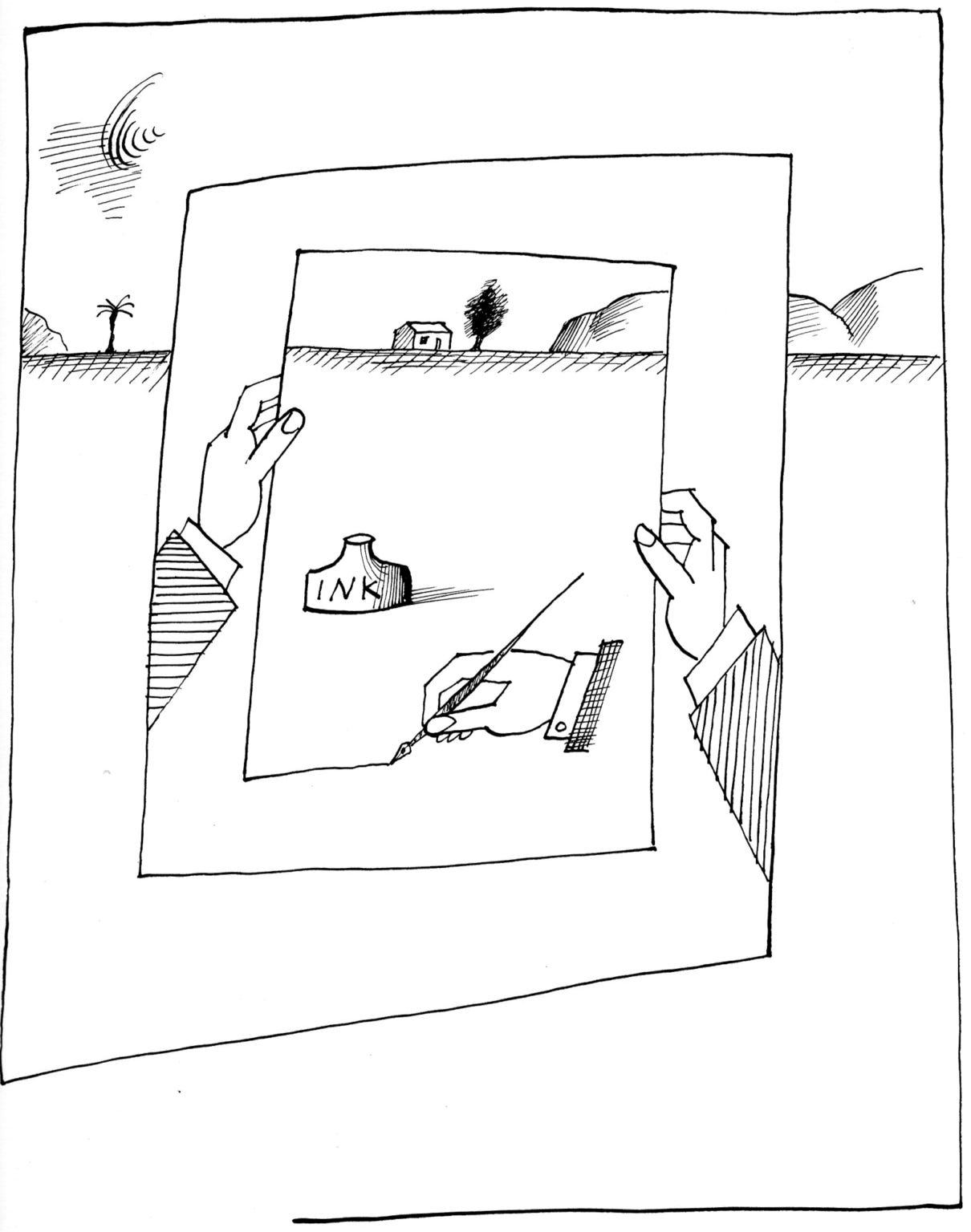
Which makes this a question about you, if you run anything. You’re playing three games at once — commercial, capital, and cultural — and you’re almost certainly running them as three. They stopped being three. Your cultural position sets your multiple, your multiple sets your cost of capital, and that cheap capital quietly builds the very advantage the story promised you had all along. It’s one loop. You’re on it right now, building gravity or leaking it, whether or not anybody in the building has thought about it for a single minute. The question was never “what’s our valuation.” It’s who’s holding the pen on the assumptions underneath it — you, or someone who doesn’t work here.
NVIDIA is the most valuable company in history. Whether that’s a bubble was always the boring question. Every price is a conviction with an author. The only question that pays is whether you know whose it is — and whether, when your company gets priced, it was you.
Loved this, especially the part about the Steinberg drawing.